Digital Marketing vs. Content Marketing: These Terms Are Not Interchangeable
A lot of businesses talk about digital marketing and content marketing like they’re the same (spoiler, they’re not).
Think of digital marketing as the entire subway system. Content marketing is the F line within it. Important, heavily used, and capable of taking people where they need to go, but still part of a bigger network.
For NYC businesses, that distinction matters. Whether you are a law firm in Midtown, a nonprofit in Brooklyn, or a B2B company trying to win larger accounts, your audience is comparing you against other smart options all day.
Content marketing is doing real business work, not simply “keeping the blog fresh.”
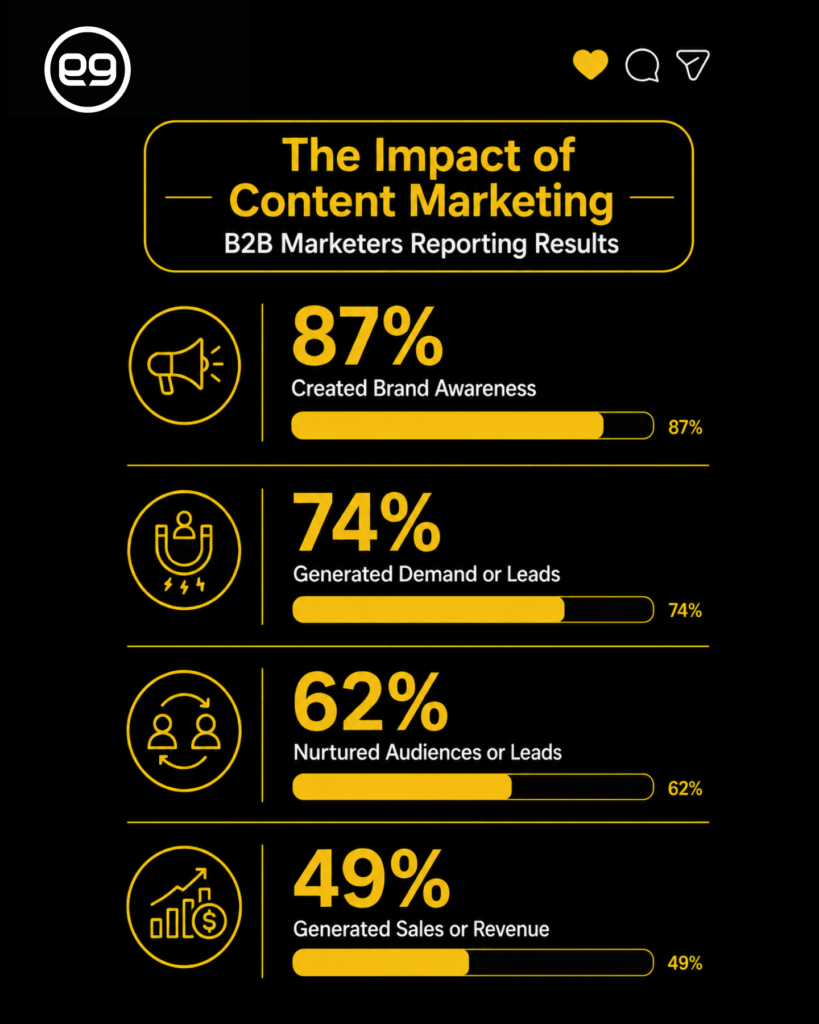
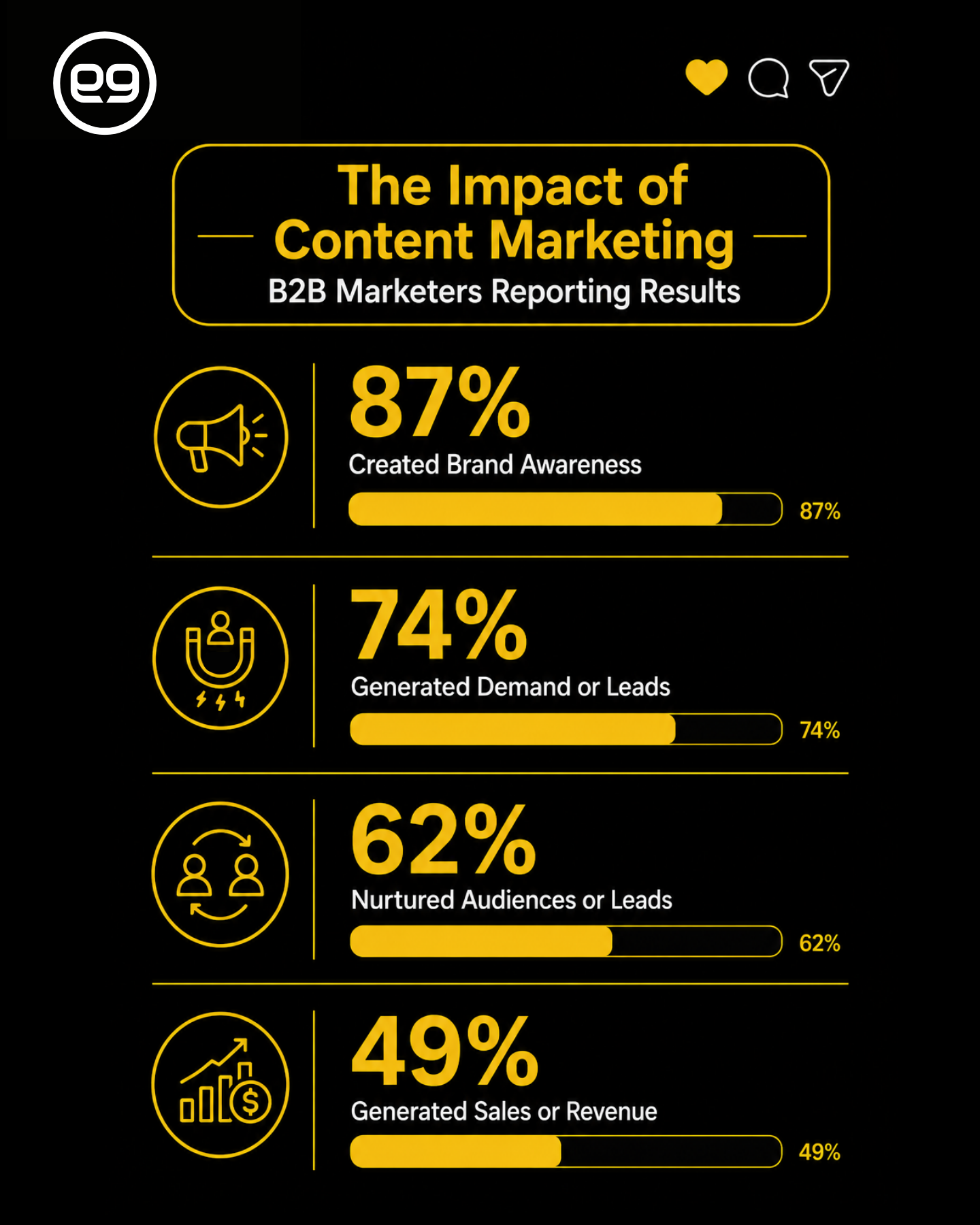
- 74% of marketers say content marketing helped generate demand or leads.
- 62% say it nurtured leads or audiences.
- 49% say it helped generate sales or revenue.
Digital marketing remains the larger operating category. DataReportal reports that global marketers spent close to US$1.1 trillion on advertising in 2024, with digital channels accounting for 72.7% of worldwide ad investment.
Long story short, content marketing is just one channel in your digital marketing strategy.
What Is Digital Marketing?
Digital marketing is the broader strategy of using online channels like email and social media to attract attention, generate leads, build trust, and drive sales. If content marketing is Madison Ave, digital marketing is all of Midtown.
A strong digital marketing strategy usually includes:
- SEO (search engine optimization): Improving your website so people can find it through search engines.
- PPC (pay-per-click): Paid ads that drive traffic from platforms like Google or social media.
- Email: Direct messaging that nurtures leads, clients, and past contacts.
- Social media: Using platforms to build visibility, share content, and stay relevant.
- Retargeting: Ads shown to people who have already visited or engaged with your business.
- Analytics: Data that shows what is working, what is not, and where to adjust.
- Content marketing: Useful content that attracts, educates, and builds trust over time.
Paid channels are a major part of that system, with 84% of B2B marketers using them. Among them, 73% use social media advertising or promoted posts, 64% use search engine marketing or PPC, and 62% use digital display advertising.
Digital marketing can’t be reduced to only “posting online.” It is the planning, spending, testing, and coordinating behind the scenes.
What Is Content Marketing?
“Content marketing is not the whole marketing machine. It is the part that explains why anyone should trust the machine in the first place.” — Conrad Strabone, Managing Partner & President | e9digital
Think of content marketing as the creation and distribution of useful, relevant material designed to attract, educate, and move an audience over time. That can include blogs, articles, guides, videos, case studies, emails, newsletters, and other assets people actually want to consume.
Content marketing is not a digital marketing side project for whoever has an extra hour on Friday. Done well, it becomes the explanation layer of your business. It answers questions before the sales call, builds trust before the first meeting, and gives your audience a reason to believe you know what you are doing.
For many NYC businesses, that trust is essential. People here move fast, filter faster, and ignore anything that feels like filler. Content has to earn its seat at the table, like trying to get a reservation at Carbone.
Good content marketing can help businesses:
- Explain complex services in plain English
- Build authority around specific expertise
- Support SEO with useful, indexable pages
- Help AI tools understand and reference your business in relevant searches
It usually works slower than paid media (pay-per-click ads, paid social, etc.), but it can compound better when planned correctly. A paid campaign is more like renting a billboard over the FDR. Useful while it is up, gone when the spend stops.
A strong guide, service page, article, or case study can keep helping people find and understand your business long after it goes live. In the last 12 months, 87% of B2B marketers say content marketing created brand awareness. The same research found that it generated demand or leads for 74%, nurtured audiences or leads for 62%, and generated sales or revenue for 49%.
That does not mean content replaces other channels. It supports them.
What’s the Difference Between Digital Marketing and Content Marketing?
This is the part people usually want in one clean answer. Digital marketing is the broader system of online channels and tactics. Content marketing is one important strategy inside that system, focused on creating useful material that attracts and nurtures people over time.
Content marketing vs. digital marketing is really a question of role and scale. Content marketing is part of digital marketing, but digital marketing is not limited to content marketing.
Think of it like running a restaurant in Manhattan. Content marketing is the menu, the reviews, the story, the chef’s point of view, and the reason people trust the place before they book a table. Digital marketing is the full operation—billboards, executive leadership, and the word of mouth— that gets people in the door.
A simple way to separate the two:
Digital Marketing
- Broader and includes more channels
- Includes paid tactics and platform-specific campaigns
- Can drive faster movement when timing matters
Content Marketing
- Narrower and focuses on education, trust, and authority
- Usually builds slower, but can last longer
In a dense market like New York, businesses often need both. You need channels that create demand now, and you need content that gives people a reason to choose you when they are comparing options.
How Does Content Marketing Support Digital Marketing?
Some people think content marketing is totally separate from digital marketing. However, it’s one of the strategies digital marketing uses to attract, inform, and convert people.
The confusion happens because content touches so many channels. A strong article can support SEO. A good case study can help sales. A smart FAQ page can improve search visibility. A useful guide can be repurposed for email, social media, and AI discovery.
Content marketing can support:
- SEO: Gives search engines useful pages to find, understand, and rank.
- Email: Offers your audience helpful reasons to keep opening and engaging.
- Social media: Creates stronger ideas to post and share.
- Sales: Answers common questions before prospects get on a call.
- AI discovery: Helps AI tools understand your expertise and surface your business in relevant searches.
Digital marketing still includes tactics content marketing does not fully cover. Paid search, retargeting, media buying, platform-specific ad campaigns, and direct-response acquisition all sit outside pure content marketing.
When NYC Businesses Need Digital Marketing More Heavily
There are moments when digital marketing needs to carry more of the weight. If a business needs immediate reach, more control over targeting, or faster lead flow, broader digital marketing channels usually need to take the lead.
In NYC, waiting for organic visibility alone can feel like trying to find an empty pay phone on the street in the ‘90s. Possible, but not always the smartest plan.
Digital marketing and content marketing decisions should be based on timing, competition, audience behavior, and business goals. Some situations simply call for more reach and more control.
Digital marketing usually needs to carry more weight when:
- You are launching a new service or offer
- You need leads faster than organic content can produce them
- You are entering a crowded NYC market
- You want tighter control over audience targeting
- You need to test messaging before building a larger content strategy
Paid channels are a standard part of that approach.
When NYC Businesses Need Content Marketing More Heavily
“Content marketing tells your audience that you’re the expert they need. In NYC, with hundreds of options, you have to be the best.” — Dana Sayles, Content Director | e9digital
Content marketing becomes more important when the buyer needs education, reassurance, differentiation, or repeated exposure before acting. That is especially true in high-trust, comparison-heavy categories, which NYC has in bulk.
If your prospects are researching, comparing, hesitating, or looking for expertise, content usually needs to do more of the work. A polished ad may get attention, but a useful guide, smart article, or relevant case study can help someone believe you are the right choice.
Content marketing strategy comes into play when the sales process requires explanation (or when a company needs to go viral). This is common for law firms, nonprofits, professional services firms, B2B companies, and businesses with complex offers.
Content marketing matters most when:
- Your costumer journey is longer
- Your service needs explanation before someone contacts you
- Your audience compares multiple providers
- Your brand needs more authority in search
- Your sales team needs better follow-up material
It also supports visibility, since organic search accounts for 53.3% of all trackable web traffic, which is one reason content remains such a strong long-term play.
The search landscape keeps expanding. Content now helps businesses show up not only for human readers, but also in AI-influenced discovery. That means strong content has to be clear, useful, well-structured, and genuinely helpful.
Why NYC Businesses Usually Need Both
“Digital marketing can get someone to the door. Content marketing helps them decide whether they should walk through it.” — Conrad Strabone, Managing Partner & President | e9digital
NYC businesses usually need a strategy with the right balance. Digital marketing helps create reach, movement, and measurable demand. Content marketing helps build trust, clarity, and long-term visibility.
One gives you more control over attention. The other gives people a better reason to remember you.
A strong mix of content and digital marketing can help NYC businesses:
- Drive faster traffic through paid and search channels
- Build authority with useful articles, guides, and case studies
- Support sales conversations with stronger educational material
- Improve organic visibility over time
- Create a more credible brand presence across channels
Buyers do not move in a straight line. They may see an ad, check your website, read a blog, compare competitors, ask a colleague, return through search, and then finally reach out. That is less like a clean sales funnel and more like trying to cross Midtown at 5:30 pm. The path changes, but the destination still matters.
Our team’s strong marketing system connects content, search, messaging, website experience, and growth. The goal is not to chase every channel, but rather to build and strengthen the right mix for the business in front of us.
FAQs: Stuff New Yorkers Usually Ask
Which Is Better for an NYC Business: Digital Marketing or Content Marketing?
Usually both. Digital marketing helps drive reach and faster demand, while content marketing helps build trust, visibility, and authority over time.
The better choice depends on your goals. If you need leads quickly, paid digital channels may need more weight. If your buyers need education before they contact you, content should play a bigger role. Most NYC businesses need a combination, because speed and credibility both matter.
Does Content Marketing Help SEO?
Yes. Content marketing supports SEO by creating relevant, search-friendly pages that answer real questions and give search engines something useful to index.
A smart blog, guide, FAQ page, or case study can help your business show up when prospects are already looking.
Can Digital Marketing Work Without Content Marketing?
Yes, but it usually has less to work with. Paid ads, email campaigns, social posts, and landing pages all need strong messaging, useful explanations, and clear proof.
Without content, digital marketing can become mostly traffic without enough trust behind it. That might get clicks, but clicks alone do not build confidence. Content gives digital campaigns more substance.
How Long Does Content Marketing Take to Work?
Content marketing usually takes longer than paid digital tactics. It needs about three weeks to see initial traction and three to six months (or even longer) for effective results. However, these timelines vary greatly depending on how competitive your market is.
A paid campaign can start generating traffic quickly, as long as the budget and targeting are right. Content often takes more time because it depends on quality, consistency, search visibility, and audience trust. The trade-off is that strong content can continue supporting SEO, sales, and brand authority after it is published.
How Should a Business Decide Where to Invest First?
A business should start by looking at its sales cycle, competition, budget, and current visibility.
If no one knows you exist, digital marketing may need to create faster awareness. If people are finding you but not converting, content may need to explain your value more clearly. If both are weak, the first step is usually a stronger strategy, not another random campaign.
A Smarter Mix Beats a Simpler Story
Digital marketing helps you move faster. Content marketing helps you become more useful, more visible, and more trusted over time. For NYC businesses trying to grow, that combination can be exactly what you need to edge over your competitors.
And if you’re looking for some help, e9digital works across small-business marketing, content strategy, legal marketing, website strategy, and AI content planning. That means we are not looking at one channel in isolation. We are looking at how the whole system helps your business earn attention, build credibility, and turn interest into real opportunities.
Let us show you how we can create a comprehensive digital marketing system to drive leads. Schedule a call with our team today.
The post Digital Marketing vs. Content Marketing: What NYC Businesses Need To Know appeared first on e9digital.